In this guide · 8 sections
The short answer
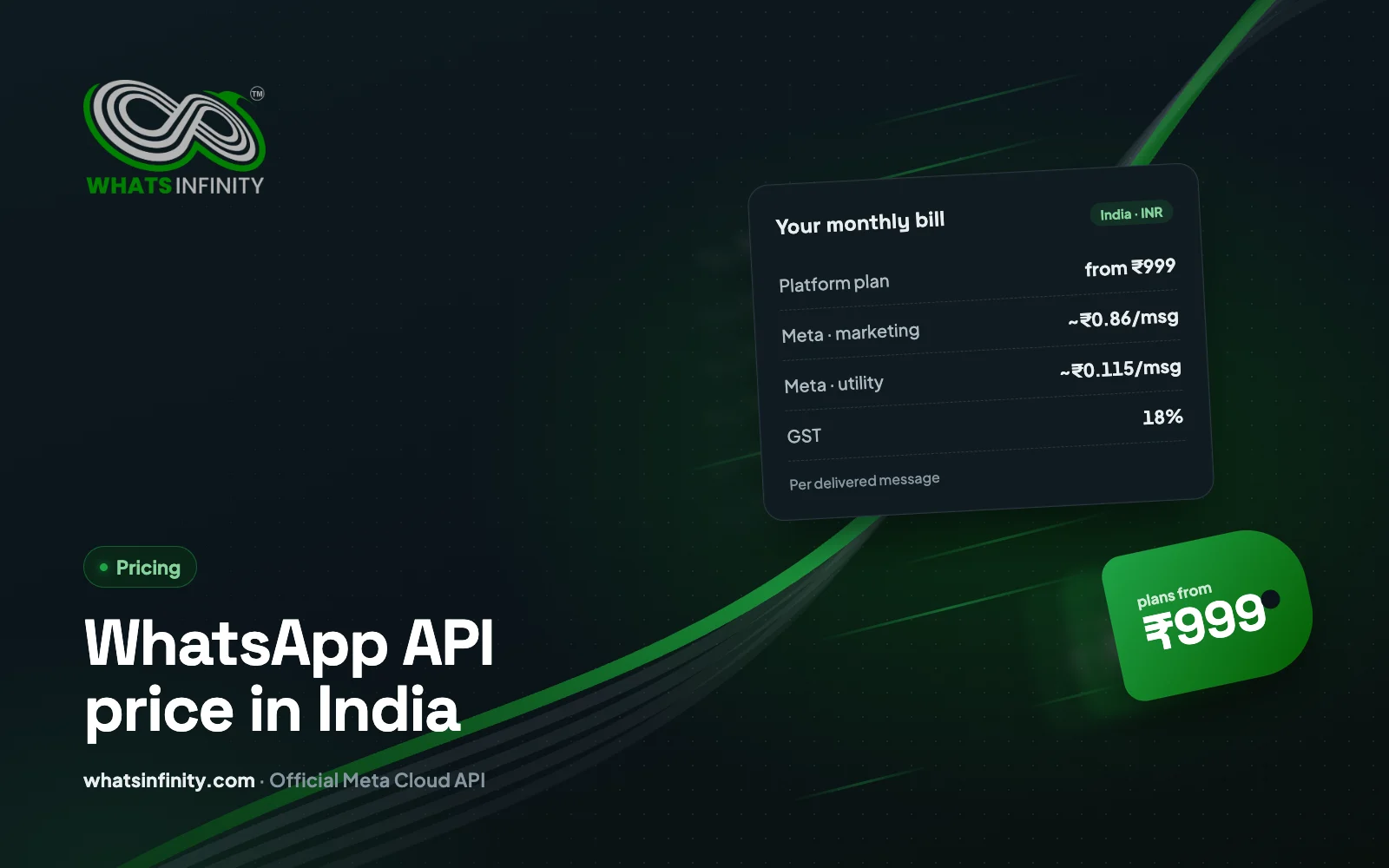
WhatsApp Business API cost in India has two layers. Meta charges per delivered message, by category, and your platform (the dashboard you send from) charges a monthly plan. Both are billed separately, and 18% GST applies on top.
For most Indian SMBs the platform plan is the fixed cost and Meta’s marketing messages are the variable one. Utility, authentication and service messages are cheap; marketing messages are where the bill grows.
Meta’s per-message rates for India (2026)
Meta stopped charging per conversation on 1 July 2025. You now pay for each delivered business message. India has its own rate card in INR. As reported from Meta’s current card, the list rates for messages to +91 numbers are:
- Marketing: about ₹0.86 per message (₹0.8631). No volume discount.
- Utility (order, payment, appointment updates): about ₹0.115 per message, with discounts only at very high monthly volumes.
- Authentication (OTPs): about ₹0.115 per message. A higher authentication-international rate applies when a business registered outside India sends OTPs to Indian users.
- Service (your free-form replies inside the 24-hour window): the first 1,000 per business phone number each month are free; after that about ₹0.115 each, from 1 October 2026.
- Messages customers send you: always free.
- Click-to-WhatsApp ads: if you reply within 24 hours, Meta opens a free entry point window of up to 7 days in which your messages are not charged.
What changed in 2025–2026
- 1 July 2025: per-conversation pricing replaced by per-message pricing.
- 1 January 2026: India marketing rate increased; INR billing launched for eligible Indian businesses (all eligible accounts must move to INR by 31 December 2026).
- 1 April 2026: authentication-international rate for India increased.
- 1 October 2026: service messages billable after 1,000 free a month per number, and utility templates sent inside an open service window are now charged. Full details in WhatsApp API Pricing Changes Oct 2026: What India Pays.
Platform plans compared
The platform fee covers the dashboard, broadcasts, flows, CRM and team seats. Figures below are public list prices as of October 2026, before GST; check each vendor’s pricing page before you decide.
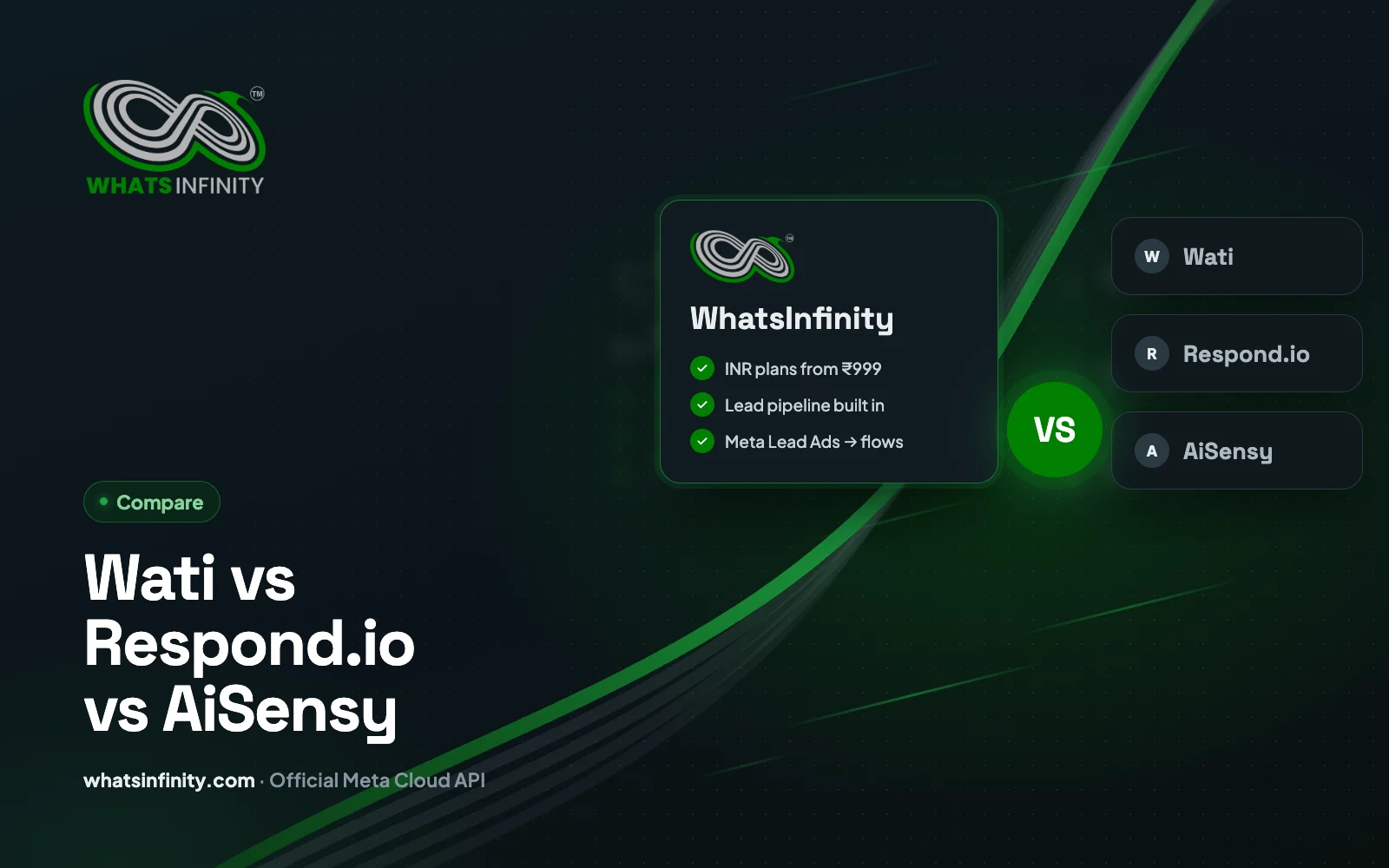
- WhatsInfinity™: FREE (CRM and Meta lead capture, 100 contacts), Basic ₹999/mo (10,000 contacts, 20,000 messages, 3 staff), Growth ₹2,499/mo (25,000 contacts, 60,000 messages, 10 staff, analytics, CAPI), Booster ₹4,999/mo (50,000 contacts, 2,00,000 messages, 15 staff). About 20% lower on yearly billing.
- AiSensy: Basic ₹1,500/mo and Pro ₹3,200/mo per its own price list, with chatbot flows and extra agents sold as add-ons.
- Wati: Growth around ₹2,499/mo per public listings, with extra users charged per seat.
- Respond.io: from about $79/mo billed yearly, priced in USD by monthly active contacts.
Watch for markups on Meta’s rates
Some providers publish their own per-message prices that sit above Meta’s list rate — for example a marketing message quoted above ₹1 when Meta’s rate is about ₹0.86. Over 50,000 messages a month that gap adds up to thousands of rupees.
Ask every vendor one question in writing: are Meta’s fees billed to my WhatsApp Business account at Meta’s rate, or resold with a margin? WhatsInfinity™ does not resell Meta messages; Meta bills you directly.
Worked example: a clinic
A clinic sends 3,000 appointment reminders (utility) and 500 health-camp offers (marketing) a month, and replies to patients well under the 1,000 free service messages.
Meta fees: 3,000 × ₹0.115 = ₹345, plus 500 × ₹0.8631 ≈ ₹432, so about ₹777, or about ₹917 with GST. On WhatsInfinity Basic (₹999) the total is roughly ₹2,100 a month including GST on both.
Worked example: a D2C brand
A brand sends 20,000 marketing messages, 10,000 order updates and 3,000 support replies a month.
Meta fees: 20,000 × ₹0.8631 ≈ ₹17,262 for marketing, 10,000 × ₹0.115 = ₹1,150 for utility, and 2,000 billable service replies × ₹0.115 = ₹230. That is about ₹18,642, or about ₹22,000 with GST. The Growth plan adds ₹2,499. Marketing is over 90% of the Meta bill — that is where to optimise.
How to lower your WhatsApp bill
- Segment broadcasts so you message people likely to act, not your whole list.
- Send genuinely transactional updates as utility templates, not marketing.
- Combine updates — one shipped-with-tracking message instead of three pings.
- Use Click-to-WhatsApp ads so follow-ups land inside the free entry point window.
- Retire templates with low read rates; check per-template analytics monthly.
- Pick a platform that passes Meta’s rates through at cost.
Frequently asked questions
What is the WhatsApp Business API price in India in 2026?
Meta charges per delivered message: about ₹0.86 for marketing and about ₹0.115 for utility and authentication messages to Indian numbers, plus 18% GST. Service replies are free for the first 1,000 per number each month, then about ₹0.115. Your platform plan is separate — WhatsInfinity™ starts FREE, with paid plans from ₹999/mo.
Is WhatsApp API still charged per conversation?
No. Meta moved to per-message pricing on 1 July 2025. Each delivered business message is billed by category and recipient country.
Is WhatsInfinity cheaper than AiSensy or Wati?
At entry level, yes: Basic is ₹999/mo against AiSensy Basic at ₹1,500/mo and Wati Growth around ₹2,499/mo (public prices, October 2026, before GST). Also compare what each plan includes — flows, CRM, staff seats — and whether Meta’s fees are marked up.
Why do two businesses pay different Meta fees?
Message mix and volume. A clinic sending mostly utility reminders pays a fraction of what a D2C brand running daily marketing broadcasts pays, even on the same platform plan.
What hidden costs appear after go-live?
Template re-approval before festivals, failed-send cleanup, staff time on manual follow-ups, and wasted ad spend when CAPI is not mapped — see Meta CAPI for WhatsApp Leads: Map Pipeline Stages to Ad Events to reduce wasted leads.
Share