Why WhatsApp lead generation works in India in 2026
India has more than half a billion WhatsApp users, and for many SMEs the app is the default channel for trust — not email, not SMS. When a customer sees your business name on WhatsApp, they expect a human tone, quick replies, and local context such as festival offers or COD confirmation. That expectation is exactly why lead generation on WhatsApp outperforms cold email for coaching institutes, D2C brands, real estate brokers, and local service providers.
The shift in 2026 is structural: Meta Lead Ads can hand off phone numbers directly into your CRM or automation stack, and the WhatsApp Business Platform (Cloud API) lets you send approved template messages at scale without violating policy. The businesses winning are not blasting purchased lists — they are building opt-in pipelines and following up within minutes using message flows.
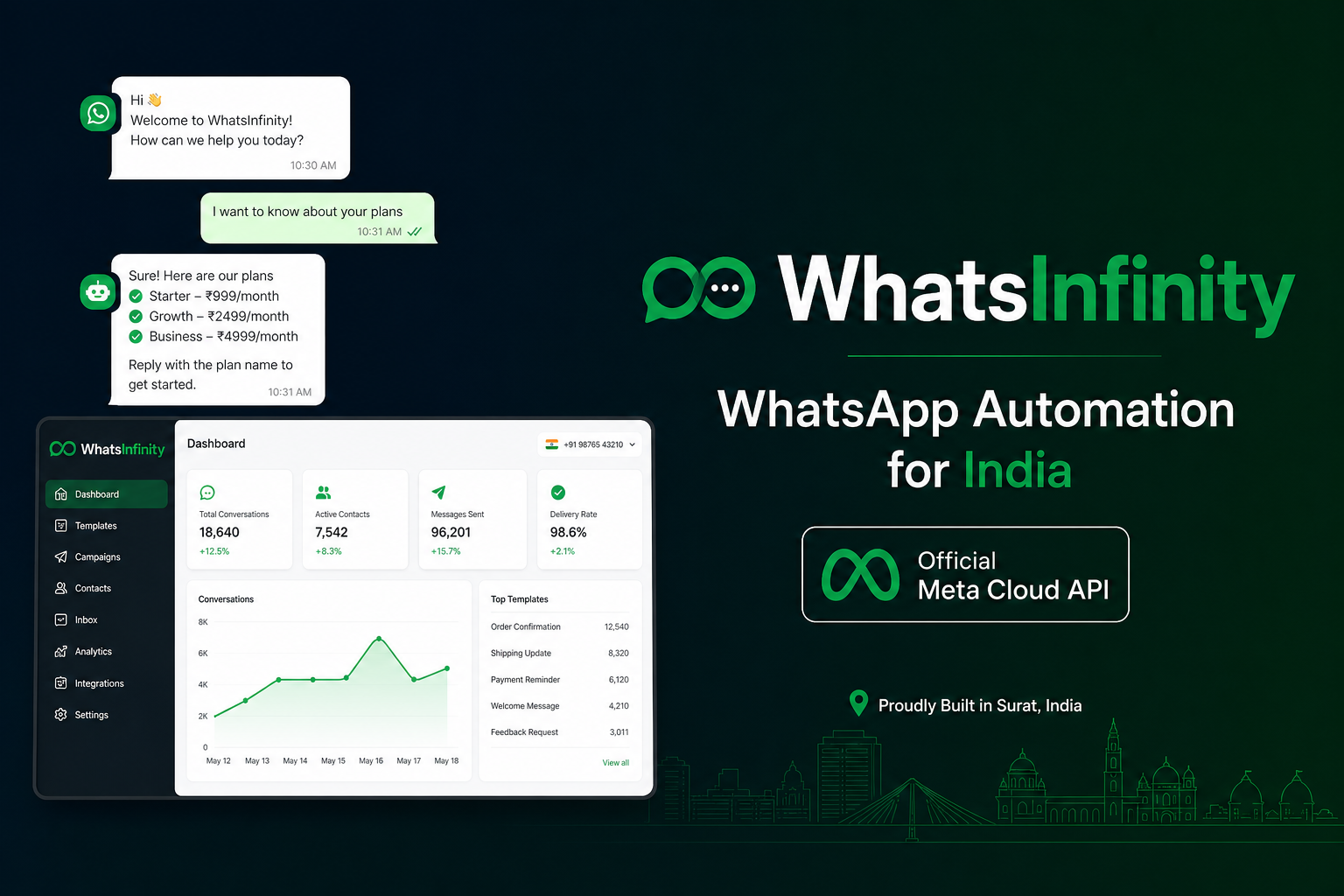
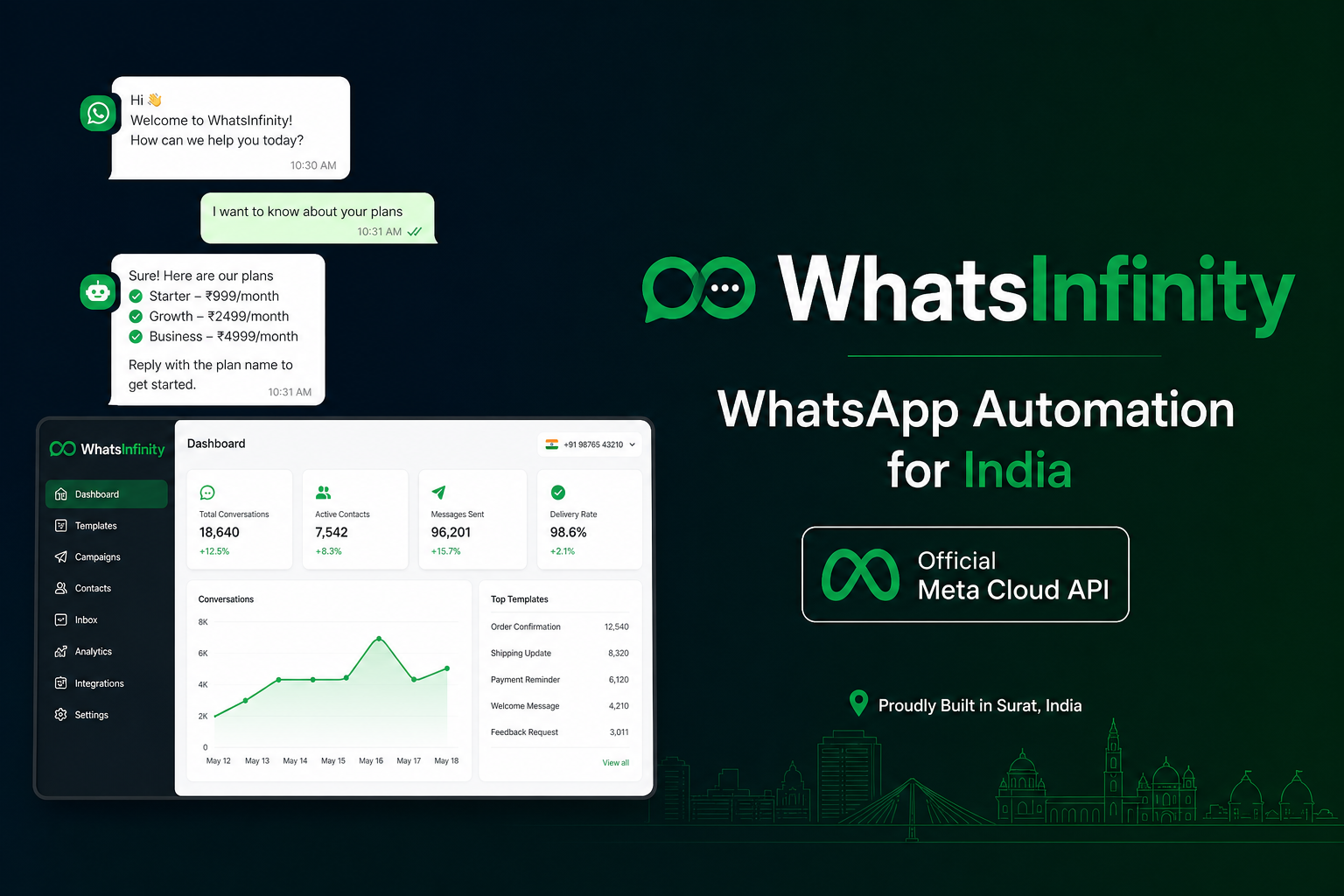
WhatsInfinity sits in that stack as a multi-tenant SaaS built for agencies and their clients: sync templates from Meta, assign customers to flows, and measure delivery and read rates from one dashboard. Lead generation becomes a repeatable system instead of a founder manually forwarding screenshots from Facebook Ads Manager.
The compliant foundation: opt-in before outreach
Every lead generation tactic on WhatsApp starts with consent. Indian regulators and Meta both punish unsolicited outreach: TRAI's DND framework applies to promotional SMS and similar principles apply to how businesses should treat phone numbers, while WhatsApp Business Messaging Policy requires that users expect messages from you. A lead is not automatically an opt-in for marketing — you need a clear disclosure at the point of capture.
Strong opt-in sources for Indian businesses include checkout checkboxes on Shopify or WooCommerce ('Send order updates on WhatsApp'), Meta Lead Ads forms that state follow-up will happen on WhatsApp, in-store QR codes at billing counters, and webinar registration pages. Document where and when consent was collected; agencies managing multiple clients should store this per customer record inside their CRM or automation tool.
WhatsInfinity imports opted-in contacts via CSV (with duplicate rejection for data hygiene) and attaches them to flows only after they exist in your customer list. That design nudges teams toward policy-safe behaviour: you cannot accidentally broadcast to a raw ad export without first normalizing contacts into your tenant.
- Never buy or scrape phone lists — Meta will throttle or ban numbers quickly
- Lead ad copy must mention WhatsApp follow-up explicitly
- Honour opt-out requests and pause flows for deactivated customers
- Keep consent timestamps for audit if a customer disputes messaging
Meta Lead Ads to WhatsApp: the 2026 playbook
Meta Lead Ads remain one of the fastest ways for Indian SMEs to fill the top of the funnel. A user taps your ad, submits name and phone inside Facebook or Instagram, and you receive the lead in Ads Manager or via webhook to your backend. The gap most teams leave open is speed: if nobody messages within five to fifteen minutes, conversion drops sharply compared to instant template follow-up.
With Cloud API, your first outbound message after a lead submission must use an approved template unless the user has already opened a 24-hour customer service window by messaging you first. Typical templates for lead gen include a welcome with the lead's name, a booking link button, or a short qualification question. Sync templates from Meta into WhatsInfinity so your team picks from live approved copy instead of outdated drafts.
Agencies running Lead Ads for multiple clients benefit from multi-tenant separation: each client has their own WhatsApp credentials, template library, and flow definitions. Super admins and agency owners can impersonate client accounts for setup without blending data across tenants — critical when Diwali campaigns for a jewellery brand must never leak into a coaching institute's customer list.
Message flows: nurture leads without a chatbot builder
WhatsInfinity is built around message flows — sequenced template steps with delays and optional business-hours gates — not a visual chatbot with branching logic on inbound keywords. That distinction matters for lead generation: your goal is reliable outbound nurture (day 0 welcome, day 2 reminder, day 5 offer) rather than parsing free-text replies inside the product.
Configure a flow by selecting approved templates per step, mapping variables from customer fields (name, city, course interest, budget range stored as custom fields), and setting delays between steps. Step one with zero delay sends immediately when a customer is assigned to the flow — ideal right after CSV import from a lead export or API integration. Later steps can wait 24 or 48 hours to avoid feeling spammy.
Business hours settings prevent 11 p.m. template pings during non-working times, which improves read rates and reduces opt-outs for businesses that respect Indian working patterns. When a lead completes the sequence, mark the customer flow as completed and move hot leads to manual follow-up in the WhatsApp Business app on your phone if needed — WhatsInfinity does not replace human closing for high-ticket sales.
Website and landing page capture
Not every lead comes from paid ads. Indian SMEs increasingly embed WhatsApp click-to-chat buttons on product pages, use Typeform or Google Forms with phone validation, and run festival landing pages during Rakhi, Navratri, or year-end clearance events. Each form submission should create or update a customer record with tags such as 'website-lead' or 'diwali-2026'.
Connect form submissions to your backend via Zapier, custom webhook, or manual CSV upload into WhatsInfinity. Because duplicate phone numbers in a CSV import reject the entire file, teams are forced to clean data upstream — painful once, but it protects broadcast reputation long term. Tagging lets you segment broadcasts later: only people who opted in on the festival page receive the seasonal template.
For high-intent pages (pricing, demo request), use a shorter flow with two steps instead of five. Long nurture sequences work for education and real estate; ecommerce remarketing often needs order-status templates plus a single promotional follow-up within policy windows.
Festivals, seasons, and local campaigns
Indian buying cycles are event-driven. A lead captured in August may convert during Ganesh Chaturthi or Diwali if you stay top of mind with useful templates — not daily spam. Plan template approvals with Meta two to three weeks before peak season because review times spike when every brand submits similar offer copy.
Segment your opted-in list by city, language preference, or product category before a festival broadcast. WhatsInfinity broadcasts target your customer table with per-recipient status tracking (sent, delivered, read, failed), so you can see which regions had delivery issues — often invalid numbers or users who uninstalled WhatsApp.
Combine a one-shot broadcast for the festival announcement with a follow-up flow for non-openers only if you have fresh opt-in and template variants approved. Respect frequency caps: three promotional touches in one week erodes trust fast, especially for SMEs whose brand is personal.
Measuring lead quality, not vanity metrics
Delivery rate and read rate from WhatsInfinity analytics tell you whether your list and templates are healthy. A 95% delivery rate with 60% read rate on a welcome template usually indicates strong opt-in quality. Sudden drops often mean template rejection, token expiry, or list contamination — investigate before scaling ad spend.
Tie WhatsApp metrics to downstream outcomes: appointments booked, demos attended, COD orders confirmed. Message logs and flow execution history show which step failed or which template variable was missing — common when custom fields like 'package_id' were empty on import.
Agencies should report per-client dashboards to prove ROI to brand owners. Multi-tenant analytics prevent one client's failed campaign from obscuring another's wins.
- Track time-to-first-message after Lead Ad submission
- Compare read rates by template and by acquisition source tag
- Review failed sends weekly — fix variables and numbers before next broadcast
- Align flow length with sales cycle (short for ecommerce, longer for B2B services)
Agency model: scale lead gen across clients
Digital marketing agencies in India often manage Meta ads for dozens of SMB clients but lack a standardized WhatsApp follow-up layer. WhatsInfinity's agency tier lets you invite clients, hand them a login, or impersonate for setup while keeping WhatsApp tokens and customer data isolated per client.
Standardize a 'Lead Ad welcome flow' template pack per vertical — coaching, clinic, real estate — and clone flows across clients after swapping templates and variable mappings. Plan limits (customers, flows, messages per month) apply at client level, so agencies upsell when a client exceeds quota rather than eating overage themselves.
Train client teams that WhatsInfinity automates outbound sequences; inbound replies are still handled in WhatsApp on the business phone unless you integrate a separate CRM. That matches how most Indian SMBs already work and avoids over-promising AI chatbot features.
Common mistakes to avoid
Messaging leads without template approval or outside opt-in rules is the fastest way to get a phone number flagged. Importing Lead Ad exports twice without deduplication triggers CSV rejection — fix duplicates in Excel before upload. Another mistake is assigning everyone to a seven-step flow when only hot leads need urgency; use tags to branch manually.
Do not treat WhatsApp as email: keep templates short, use the customer's name, one clear call to action, and Hindi-English mix only if your audience expects it and Meta approves the copy. Finally, set calendar reminders for WhatsApp access token renewal — WhatsInfinity alerts you before expiry, but renewal is still manual entry of the new token from Meta.
Getting started this week
Audit current lead sources and add WhatsApp disclosure to every form. Connect your number to Cloud API, sync templates in WhatsInfinity, and build one two-step welcome flow for your highest-volume channel — usually Meta Lead Ads. Import a small test batch, verify delivery and reads, then connect ad spend.
Once the pipeline works, add festival segmentation and agency-style client separation if you resell services. Lead generation on WhatsApp in 2026 is not a hack; it is consent, speed, approved templates, and measured follow-through.
Frequently asked questions
- Can I message Meta Lead Ad submissions immediately without the user texting me first?
- Yes, if you use an approved WhatsApp template and the lead ad clearly disclosed WhatsApp follow-up as part of opt-in. The first message cannot be free-form text outside Meta's template rules.
- Does WhatsInfinity build chatbots for lead qualification?
- No. WhatsInfinity focuses on outbound message flows with approved templates, delays, and business hours — not inbound keyword bots. Qualification is usually done via template buttons, links, or human follow-up on WhatsApp.
- How do agencies manage lead gen for many clients?
- Each client is a separate tenant with own credentials, customers, templates, flows, and broadcasts. Agency users can invite or impersonate clients for setup without mixing lists.
- What if my CSV import from leads fails?
- WhatsInfinity rejects the entire import if any duplicate phone appears in the file. Remove duplicates, validate numbers with country code, and ensure custom fields match your schema before re-uploading.