In this guide · 7 sections
What WhatsApp broadcast software actually does
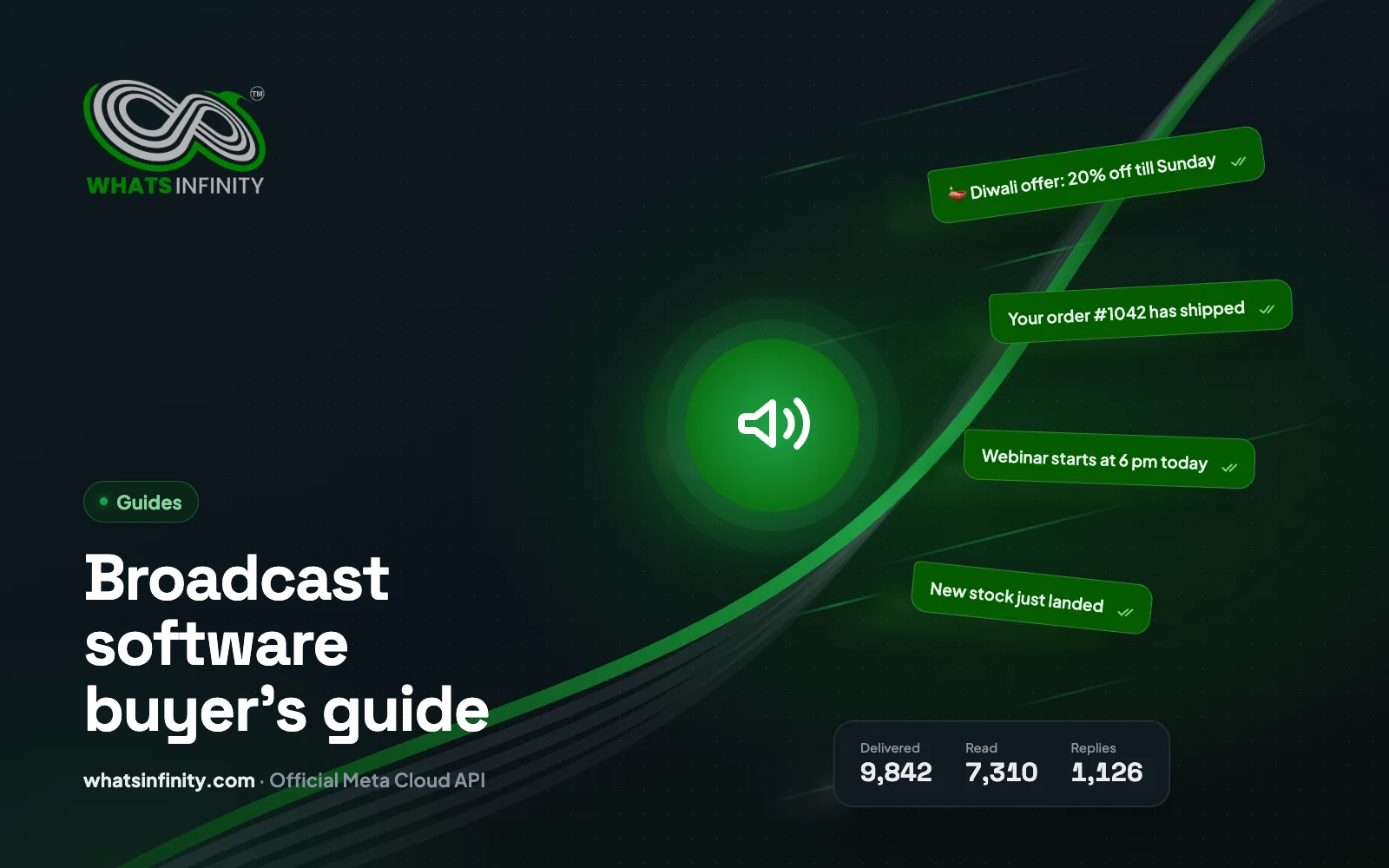
Broadcast software sends one approved message template to many opted-in customers at once, personalised with their name or order details, and then tracks what happened: sent, delivered, read, failed. The WhatsApp Business app’s own broadcast lists only reach people who saved your number and cap list size, which is why growing businesses move to the official WhatsApp Business Platform.
Done properly, a broadcast is not spam: it is a festival offer, a restock alert, a fee reminder or a webinar invite to people who asked to hear from you. Done badly, it gets your number flagged and your template paused.
Official API tools vs "bulk WhatsApp senders"
Searches for bulk WhatsApp tools in India turn up many unofficial senders that automate WhatsApp Web or modified apps. They look cheap, but they break WhatsApp’s terms, and numbers that use them are regularly banned with no appeal. Customer data also passes through tools with no accountability.
Official broadcast software uses Meta’s Cloud API: templates are approved by Meta, sends go through Meta’s infrastructure, and you get delivery receipts. You pay Meta per delivered message, but the number is safe to build a business on. More on this in Official WhatsApp API vs Unofficial Tools 2026: Ban Risk & Alternatives.
The 10 features to check before you buy
- Audience targeting by tag, group and custom field, not only "all contacts".
- Opt-in tracking per contact, so you can prove consent under the DPDP Act.
- Template sync and submission, with variable mapping to customer fields.
- Scheduling, so festival and sale messages go out at the right hour.
- Delivery, read and failure reports per campaign, with export.
- Retry for failed recipients without resending to everyone.
- Protection against Meta’s daily messaging limit, so a campaign does not stall halfway.
- Media templates: images, video and documents (catalogues, price lists).
- A path from broadcast reply to a sales conversation: replies should land in an inbox or a lead pipeline.
- Team roles, so a junior staff member cannot blast your whole list.
What a broadcast costs in India
Meta bills per delivered message by category and recipient country. As of the July 2026 rate card, third-party trackers list India at roughly ₹0.86 per marketing message and roughly ₹0.115 per utility or authentication message, before 18% GST. A 10,000-recipient festival offer is therefore around ₹8,600 plus GST in Meta fees alone, on top of your software plan. Check the current rate card in your Meta Business Manager before you budget.
Two ways to keep the bill down: send utility templates for genuinely transactional updates (order, payment, appointment) instead of dressing them up as marketing, and segment so you message the 3,000 people likely to buy rather than all 10,000.
Segmentation beats volume
The broadcasts that work in India are narrow. "Customers in Pune who bought in the last 90 days" outperforms "everyone", both in replies and in Meta’s view of your number’s quality. Build segments from tags (interest, branch, product), groups (lead source, event) and custom fields (city, last order).
Watch read rates per segment. If a segment reads your messages less than half as often as the rest, message it less, or drop it.
Protect your number’s quality rating
- Message only people who opted in, and say who you are in the first line.
- Always include an easy way to stop (a "Stop offers" button or keyword), and honour it.
- Keep frequency reasonable: weekly at most for promotions, unless customers asked for more.
- Start new numbers with smaller sends and grow volume as Meta raises your limit.
- If a template’s quality drops, pause it and rewrite rather than pushing harder.
How broadcasts work in WhatsInfinity
WhatsInfinity™ sends personalised template broadcasts to your full list, a tag or a group, with scheduling, cancel, per-recipient retry and export. Before a campaign is queued it checks the audience against your remaining Meta daily limit, so a send does not fail halfway. Replies flow into the same workspace as your leads and follow-ups.
Broadcasts are included from the Basic plan (₹999 per month, 20,000 messages a month), with analytics on Growth and above. See WhatsApp broadcast tool for the feature tour.
Frequently asked questions
What is the best WhatsApp broadcast software in India?
Choose one that uses the official WhatsApp Business Platform, tracks opt-in, segments by tags and fields, schedules sends and reports delivery and read rates. WhatsInfinity™, Wati and AiSensy are common official options for Indian businesses.
Is bulk WhatsApp messaging legal in India?
Sending to opted-in customers through the official API with approved templates is allowed. Unofficial bulk senders violate WhatsApp’s terms and put your number at risk of a ban. See How to Send Bulk WhatsApp Messages Legally in India.
How much does a WhatsApp broadcast cost per message in India?
Meta charges per delivered message. Recent trackers list roughly ₹0.86 for marketing and ₹0.115 for utility messages to Indian numbers, plus 18% GST and your software subscription. Check Meta’s current rate card for exact figures.
How many contacts can I broadcast to per day?
Meta sets a daily limit on unique customers you can start conversations with, and raises it as your number sends good-quality messages. Good broadcast software checks this limit before queuing a campaign.
Can I send images and PDFs in a WhatsApp broadcast?
Yes, through media templates with an image, video or document header. Catalogues and price lists as PDFs work well for B2B and retail broadcasts.
Share