WhatsApp for Clinics & Hospitals India: Reminders, Consent
How Indian clinics use the WhatsApp Business API for appointment reminders, report alerts and follow-ups, with patient consent and data handling done right.
 Jaimik Patel, Founder of WhatsInfinityPublished . Updated
In this guide8 sections
Where WhatsApp helps a clinic most
A front desk spends much of its day on repeat questions and reminder calls: is the doctor in today, what time is my slot, is my report ready. Patients, for their part, rarely answer unknown numbers but read WhatsApp within minutes.
That makes WhatsApp the natural channel for three jobs: reminding patients about appointments, telling them when something is ready, and bringing them back for follow-up care. All three are transactional or service-led, which keeps them on the safer side of WhatsApp's messaging policy.
Appointment reminders that reduce no-shows
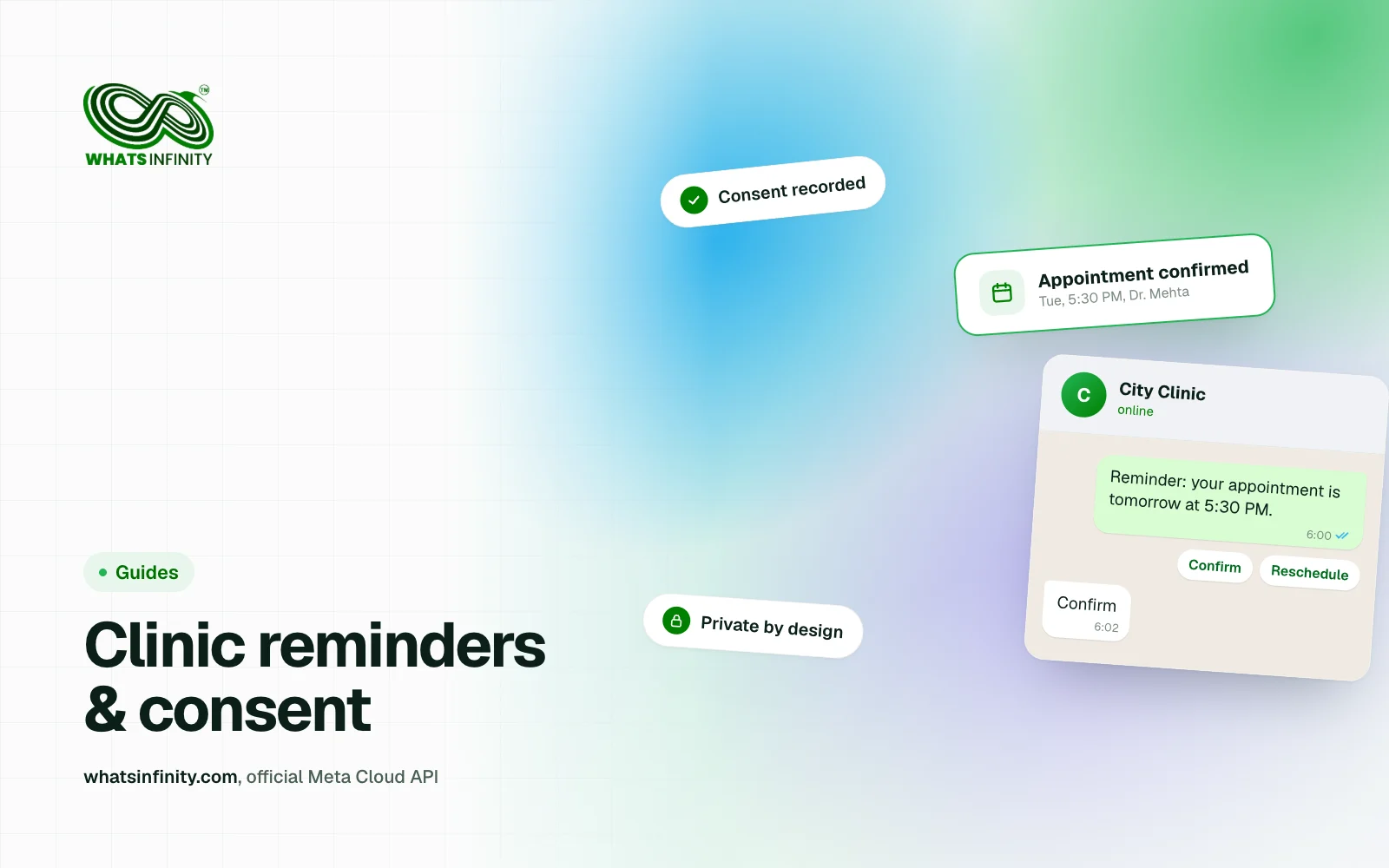
Reminders are utility messages because they relate to something the patient already booked. Keep them purely informational and leave promotions out of them.
- Confirm the booking immediately with date, time, doctor and clinic address or map pin.
- Send a reminder the evening before and a short one a couple of hours ahead.
- Add Confirm and Reschedule buttons so the patient can respond without calling.
- Log the response against the patient record so the front desk can re-use the slot early.
Report-ready and prescription alerts
Tell the patient that a report is ready and where to collect it or how to request it, rather than sending the clinical result itself in a chat message. Health information is sensitive; a notification plus a secure collection step is a much safer pattern than attaching lab values to a WhatsApp message.
Where you do share documents such as a prescription copy or a discharge summary, send them only to the number the patient registered and only after they have asked for it.
Follow-up care and recall campaigns
Many treatments need a return visit: vaccinations, dental check-ups, post-procedure reviews, chronic-care refills. A recall message tied to the patient's own history ("your six-month check-up is due") is useful rather than intrusive, and it is far more effective than a generic health tip broadcast.
Only message patients who have agreed to hear from you on WhatsApp, and give them an easy opt-out. Avoid anything that reads as medical advice in a template.
Consent and data handling under the DPDP Act
Patient data is personal data, and India's Digital Personal Data Protection Act expects clear consent, a stated purpose and sensible retention. Capture consent on the registration form in plain language, record when and how it was given, and honour withdrawal quickly.
Keep the purpose narrow: reminders and care updates are one purpose; marketing a new service line is another and needs its own consent. The practical checklist is in DPDP Act & WhatsApp Marketing India: Consent & Retention.
Business hours and the front-desk handover
A clinic is not staffed at midnight, and patients should not be left wondering. Set an out-of-hours auto-reply that gives clinic timings and an emergency instruction, then hand genuine conversations to the front-desk team in the shared inbox during working hours.
With WhatsInfinity™ staff accounts, reception can work from assigned conversations and follow-ups without seeing your full customer directory or billing settings.
A safe starter setup
- Get the clinic's number verified on the official Cloud API.
- Submit three templates first: booking confirmation, reminder, report ready.
- Add a consent line to your registration form and keep the record.
- Pilot with one doctor's patients for two weeks before rolling out to the whole clinic.
Frequently asked questions
Can clinics send appointment reminders on WhatsApp?
Yes. Reminders for an appointment the patient has booked are sent as utility templates on the official WhatsApp Cloud API, ideally with Confirm and Reschedule buttons.
Should I send medical reports over WhatsApp?
It is safer to notify the patient that a report is ready and share it only on request to their registered number. Avoid putting clinical results in template text.
Do I need patient consent to message them on WhatsApp?
Yes. Capture clear consent at registration, record it, and let patients opt out at any time. Consent for care reminders does not automatically cover marketing messages.
Is WhatsApp automation allowed for hospitals in India?
Hospitals can use the official WhatsApp Business Platform for transactional and service messages, provided they follow WhatsApp's Business Messaging Policy, obtain consent and handle patient data in line with the DPDP Act.